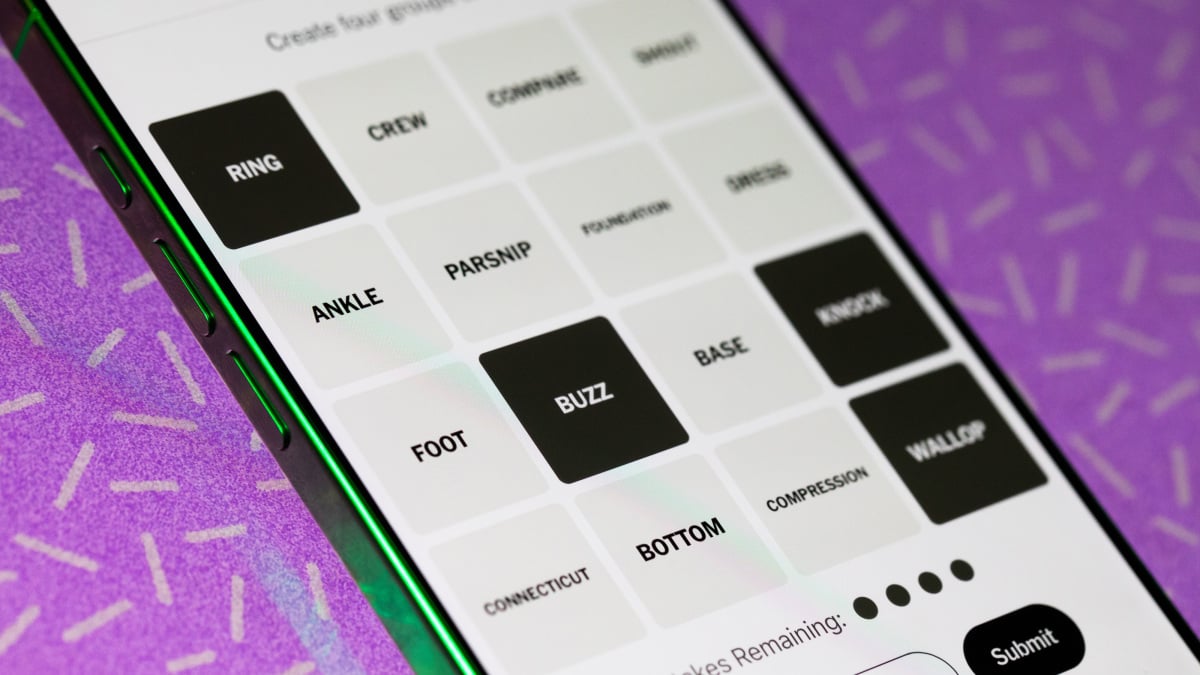
The Phonetic Challenge: Mastering Nickname Homophones in NYT Connections
NYT Connections has captivated puzzle enthusiasts worldwide, offering a daily dose of linguistic challenge and lateral thinking. While some categories are straightforward, others demand a deeper dive into wordplay, phonetics, and even cultural knowledge. Among the most fiendishly clever are the "Nickname Homophone" categories, designed to trip up even seasoned solvers. One particularly memorable instance, exemplifying this unique challenge, featured the elusive pair of
Brain Stew Broccoli Rabe. This article will unravel the genius behind these categories, provide actionable strategies, and help you master the art of uncovering phonetic nicknames hidden in plain sight.
The Ingenious Trap of Nickname Homophones
The beauty and frustration of Nickname Homophone categories lie in their deceptive simplicity. These groupings, often found in the dreaded "purple category" – notorious for being the hardest – consist of words or phrases where the *ending sound* phonetically matches a common nickname. It’s not about what the word *means*, but what it *sounds like* when you say it. This requires a significant leap from semantic connections to a purely audial one, pushing solvers to engage a different part of their cognitive toolkit.
The NYT Connections #1016 puzzle from March 23, 2026, perfectly illustrated this concept. The purple category, aptly titled "Ending In Nickname Homophones," featured a set of words that were deceptively ordinary on the surface:
- BRAIN STEW
- BROCCOLI RABE
- JUNGLE GYM
- OPEN MIC
At first glance, these words seem disparate. One might initially group "Brain Stew" and "Broccoli Rabe" under a "food" or "ingredients" theme, falling directly into the designer’s trap. However, the true connection emerges when you pronounce the latter part of each phrase:
- BRAIN STEW sounds like 'Stu' (a common nickname for Stuart).
- BROCCOLI RABE sounds like 'Rob' (a common nickname for Robert).
- JUNGLE GYM sounds like 'Jim' (a common nickname for James).
- OPEN MIC sounds like 'Mike' (a common nickname for Michael).
This phonetic brilliance highlights why
Brain Stew Broccoli Rabe became such a talking point among Connections solvers. It’s a masterclass in misdirection, demanding that players listen to the words, not just read them, and think beyond their conventional meanings. The difficulty is further compounded by the fact that the second word, when part of a compound phrase like "Broccoli Rabe," might not be a word you frequently isolate in your mind. This requires a conscious effort to break down the phrase and focus on its acoustic properties.
Decoding the Deliberate Misdirection: Why "Brain Stew" Was a Masterstroke
Of all the words in the March 23, 2026, puzzle, "Brain Stew" stands out as a particularly cunning inclusion. Its immediate semantic association with "food" or "culinary terms" provides a powerful red herring, making it a perfect example of how Connections puzzles play with our natural problem-solving instincts. When confronted with a list including "Broccoli Rabe," the mind’s natural inclination is to look for other food-related items. "Brain Stew" fits this mold perfectly, leading many solvers down a false path. This initial strong pull towards a "food" category for
Brain Stew Broccoli Rabe is precisely what makes these homophone puzzles so challenging and rewarding to solve.
The designers leverage our cognitive biases – our tendency to seek out the most obvious connections first. To overcome this, solvers must consciously resist the urge to immediately categorize based on meaning. Instead, the strategy shifts to a more analytical, auditory approach. When you encounter a word like "Brain Stew" or "Broccoli Rabe" that doesn't seem to fit with other obvious categories, or if a potential category feels too thin, it's a strong signal to explore alternative forms of connection, such as homophones. This intentional misdirection forces players to engage in genuine lateral thinking, requiring a pivot from a semantic interpretation to a phonetic one, making the eventual discovery of the "Stu" and "Rob" connection all the more satisfying. Understanding this deliberate misdirection is key to unlocking similar categories in future puzzles. For a deeper dive into the specific elements of this puzzle, you might find our article
Unraveling Brain Stew & Broccoli Rabe in NYT Connections particularly enlightening. And to understand the clever misdirection, check out
Why Brain Stew Tricked Solvers in NYT Connections #1016.
Strategies for Conquering Homophone Categories in NYT Connections
Mastering Nickname Homophone categories, exemplified by the challenge posed by
Brain Stew Broccoli Rabe, requires a shift in perspective and the adoption of specific strategies. Here are practical tips to boost your success rate:
- 1. Pronounce Words Aloud (and Clearly!): This is arguably the most critical tip. Many homophone categories are nearly impossible to solve by simply reading the words silently. Say each word or the latter part of a compound phrase out loud. Listen intently to its ending sound. For "Broccoli Rabe," isolating "Rabe" and hearing "Rob" is crucial. For "Brain Stew," "Stew" and "Stu" must click phonetically.
- 2. Focus on the Latter Half of Compound Terms: As seen with "Brain Stew" and "Broccoli Rabe," these categories often feature two-word phrases. The nickname homophone typically resides in the second word. Train yourself to mentally (or audibly) isolate the last part of a multi-word entry.
- 3. Cultivate a "Nickname Rolodex": Keep a mental list of common male and female nicknames. 'Stu,' 'Rob,' 'Jim,' 'Mike,' 'Dave,' 'Pat,' 'Chris,' 'Jen,' 'Sue,' 'Al,' 'Lou,' 'Fran,' 'Sal,' etc., are frequent culprits. The March 23rd puzzle notably featured all male nicknames, a pattern worth observing.
- 4. Think Beyond the Obvious: If you're stuck and seemingly obvious categories (like "food" for "Brain Stew" and "Broccoli Rabe") aren't working or don't form a complete group, challenge your initial assumptions. This is when you should start exploring more abstract or phonetic connections.
- 5. Look for Phonetic Consistency: Once you suspect a homophone category, try to find other words that end with a similar *type* of sound, even if the actual nickname isn't immediately apparent. For instance, if you find one word ending in a distinct single-syllable sound that sounds like a name, search for others.
- 6. Learn from Past Puzzles: The more you play and review solutions to difficult puzzles like #1016, the better your intuition will become. Recognizing the patterns and cleverness behind categories like "Ending In Nickname Homophones" will make future encounters less daunting.
Beyond Brain Stew Broccoli Rabe: The Broader Impact on Your Puzzle Skills
While the specific puzzle featuring
Brain Stew Broccoli Rabe was a challenging one-off, the lessons learned from it are enduring. Mastering categories like "Nickname Homophones" significantly hones your overall NYT Connections abilities. It cultivates a sharper ear for phonetics, encourages a more flexible approach to word association, and strengthens your capacity for lateral thinking – skills invaluable for tackling any puzzle the game throws your way.
By consciously practicing these strategies, you’re not just solving a single category; you’re expanding your cognitive toolkit. You'll become more adept at identifying subtle linguistic tricks, resisting common misdirections, and ultimately, finding satisfaction in solving the most enigmatic groupings. The journey from being stumped by "Brain Stew Broccoli Rabe" to confidently identifying its phonetic connections is a testament to growth in your puzzle-solving prowess.
Conclusion
The "Nickname Homophones" category, perfectly embodied by the challenge of
Brain Stew Broccoli Rabe in NYT Connections #1016, stands as a testament to the puzzle's ingenious design. It demands more than just vocabulary; it requires a keen ear, a flexible mind, and the courage to look beyond the obvious. By consciously employing strategies such as pronouncing words aloud, focusing on phonetic endings, and building a mental rolodex of common nicknames, you can demystify these deceptively difficult groupings. Embrace the lateral thinking, listen closely to the sounds of the words, and you'll find yourself mastering even the trickiest of NYT Connections puzzles, turning frustration into triumphant 'aha!' moments.